When first introduced into the English ballrooms in the early 1800's, the Waltz was denounced by both church and state for its vulgarity and immorality... this was, after all, the first time society had seen this outrageous dance position, with the man holding the lady so close to his body. But the very thing that brought it such criticism also made it appealing, and the Waltz was here to stay.
Throughout its history, the Waltz has undergone many changes. Even before its introduction into society as a ballroom dance, it was a country folk dance born in the seventeenth century in the suburbs of Austria and Bavaria. By the middle of the eighteenth century, the dance had grown in popularity and spread throughout Europe.
The Waltz was introduced into the United States in the mid-1800's. The standard Waltz tempo at this time was still very fast and quite demanding to the average dancer, and before long, composers were writing music which was much slower. From this music evolved a style of Waltz called the Boston, with slower turns, and more longer, gliding movements. While the Boston eventually faded away, it did stimulate the development of what we now know as Slow Waltz.
The twentieth century saw two distinct styles of the Slow Waltz evolve. The English refined the movements and codified the technique into the competitive International style, while the Americans developed a Waltz with a more theatrical flavor.



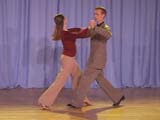 Left Box (Reverse) Turn
 Right Box (Natural) Turn
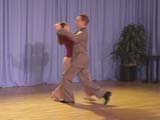 Closed Forward Changes
 Closed Backward Changes
 Six-Count Underarm Turn